Data-Centric AI
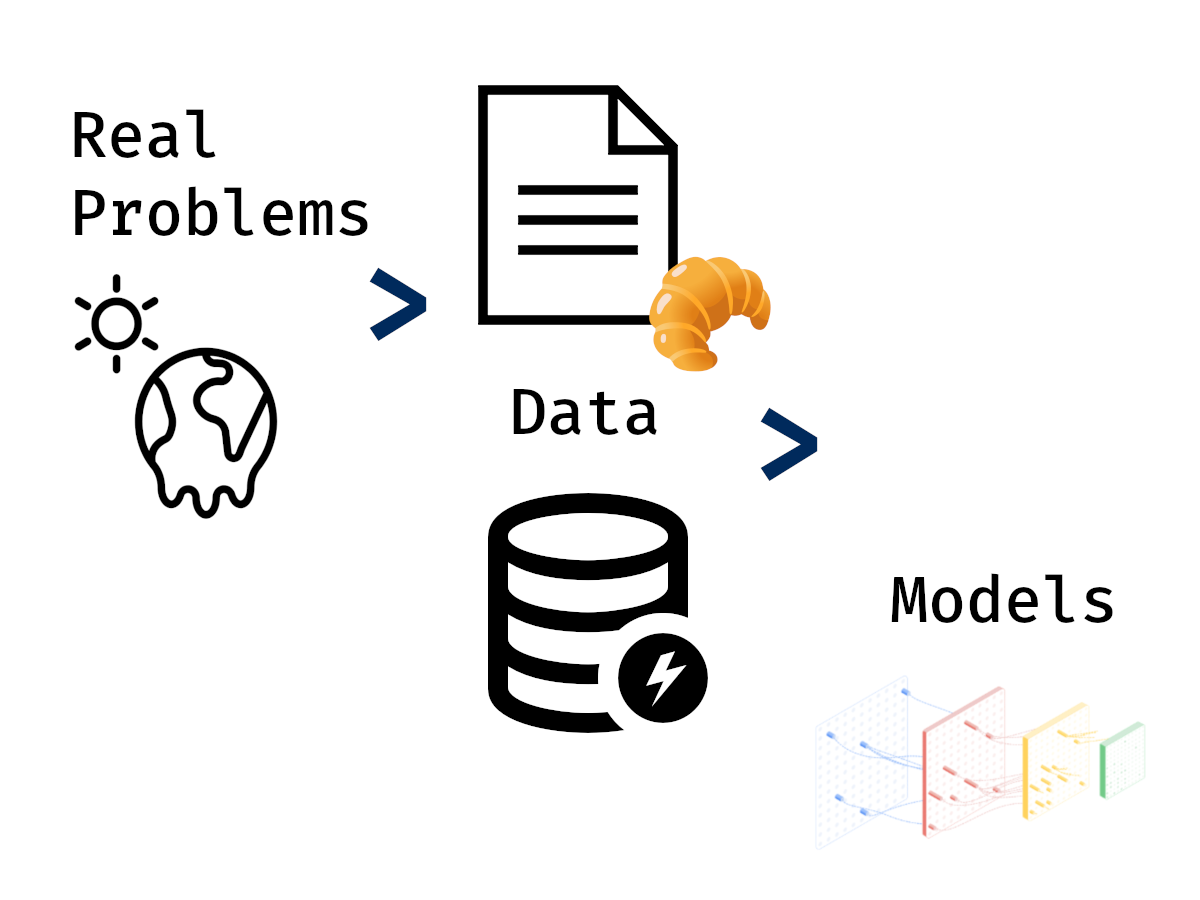
Modeling is rarely the hardest part anymore. More often the bottleneck is framing the right problem and finding the data to answer it. Data-centric AI starts from a simple observation: progress happens one dataset at a time. This matters more in chemistry than in images or text, because experimental data is scarce, expensive and scattered across labs. A large part of our work is curating, generating and releasing datasets and benchmarks that let the field measure real progress.
- • On the Selectivity of Generative Models in Structure-Based Drug Design
- • TasteBench: Multimodal Benchmark for Sensory Prediction, from Molecules to Sustainable Foods
- • kinGEMs: A scalable framework for resource-constrained models through stochastic tuning of deep learning-predicted kinetic parameters